Spain is increasingly positioning itself as a key player in Europe’s digital transformation.
As shown during the latest Meeting on the Digital Economy and Telecommunications in Santander -the 40th Conference on the Digital Economy and Telecommunications (also known as Santander40, 31st Aug-2nd Sept 2026), the country’s digital economy generated €146.7 billion in 2025, equivalent to 27% of GDP, according to AMETIC’s 2026 Digital Economy Barometer.
But beyond the growth of the digital economy, another transformation is taking place: Artificial Intelligence is gradually moving from experimentation to practical adoption across Spanish businesses.
According to the Banco de España’s analysis of AI adoption in Spanish firms, almost 20% of surveyed Spanish companies were already using AI, although for most organisations adoption was still at an experimental stage. The same analysis highlights that adoption is higher among larger and more productive companies, while lack of skilled labour, implementation costs and data availability remain among the main barriers.
This picture is particularly relevant when looking at SMEs. According to the OECD’s Economic Survey of Spain 2025, only around 10.4% of Spanish SMEs reported using AI applications, with limited digital capabilities, skills shortages, implementation costs and regulatory concerns among the factors slowing down adoption. The same data were confirmed by the research conducted as part of the SMART project activities by the local partner SGS.

From digitalisation to AI-enabled workplaces
This makes Spain an interesting example of where the AI transition currently stands: the technology is no longer just a future opportunity, but its impact is still far from being fully realised.
For businesses, the next step is not simply to introduce AI tools, but to understand where they can create meaningful value. The Banco de España found that Spanish companies currently use AI mainly to optimise internal processes and support activities such as marketing, while applications involving task automation and innovation remain less widespread.
This is where the workplace dimension becomes particularly relevant. As AI becomes embedded in everyday processes, the value of human skills is also changing. Employees increasingly need to understand how to work alongside AI, interpret its outputs, manage risks and make informed decisions about when and how these technologies should be used.
The challenge is therefore not only about adopting AI, but about preparing people for an AI-enabled workplace.
From technology adoption to skills adoption
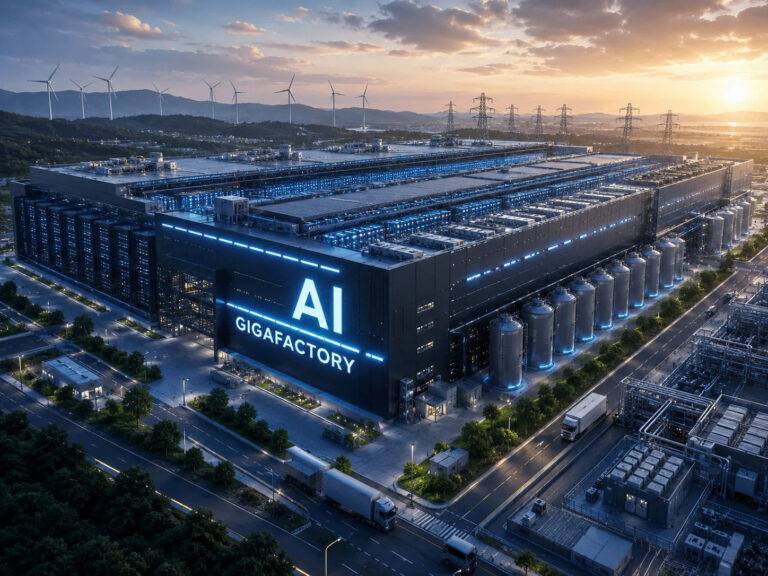
In concrete terms, the AI transition is ultimately also a skills transition. In fact, in line with major international competitors, Spain is increasingly investing in the ecosystem needed to support AI adoption. In June 2026, the Spanish Government announced the expansion of the BSC-CNS Artificial Intelligence Factory through five sectoral nodes, designed to connect SMEs and sector organisations with technological and scientific capabilities and support the development and application of AI. The initiative includes a €2.7 million investment.
The direction is clear: AI adoption requires an ecosystem in which technology, businesses and people develop together. This means that future competitiveness will depend not only on access to AI solutions, but also on the ability of workers and organisations to understand, implement and use them effectively.
What Spain tells us about the future of work
Spain’s current AI journey -and the still-present mismatch between experimentation and widespread, effective implementation- illustrates an important point for the wider European workplace: the impact of AI will depend as much on people as on technology. Bridging that gap will require investment in infrastructure, responsible adoption and, above all, skills.
The Spanish case reflects one of the key challenges at the heart of the SMART project: as AI becomes an increasingly important part of the manufacturing workplace, workers need more than access to new technologies. They need the skills, confidence and understanding to use AI effectively and responsibly in their professional environment.
Spain shows that this transition is already underway. The next challenge is making sure that people are ready to shape it.
Remain in the loop of SMART information, subscribe to the project Newsletter!